
HUDSON INSTITUTE
Role: Lead Creative (UX Strategy, UI Design, Client Collaboration)
Agency: Third and Grove
Scope: Full website redesign, UX architecture, component design, navigation and content strategy, client/stakeholder direction
Hudson Institute is a leading policy think tank, producing a massive amount of research, publications, and events. But its website wasn’t keeping pace. I led the redesign to transform it from a frustrating content maze into a modern, research-driven platform — one that made discovery easier, publishing smoother, and Hudson’s mission clearer.
THE CHALLENGE
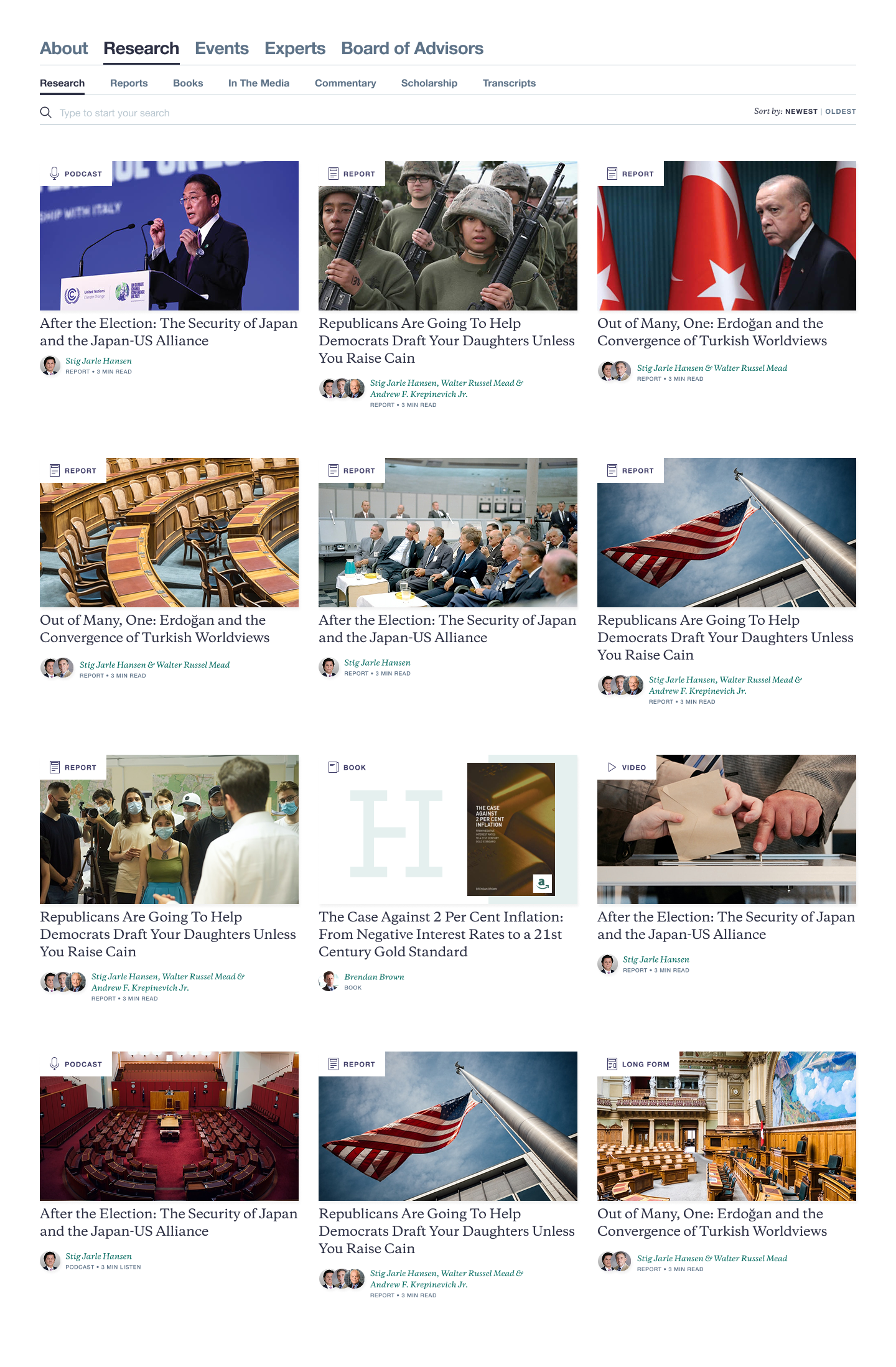
The old site buried valuable research behind generic landing pages and unfiltered content dumps. Clicking “Research” led to a jumble of articles, publications, podcasts, and transcripts with no hierarchy or way to refine results. Search was just as broken, leaving users in a digital corn maze. With no filters, no structure, and every page looking the same, engagement cratered. Many users gave up entirely and resorted to calling Hudson staff directly — turning the site into a glorified contact sheet rather than a research hub.
THE WORK
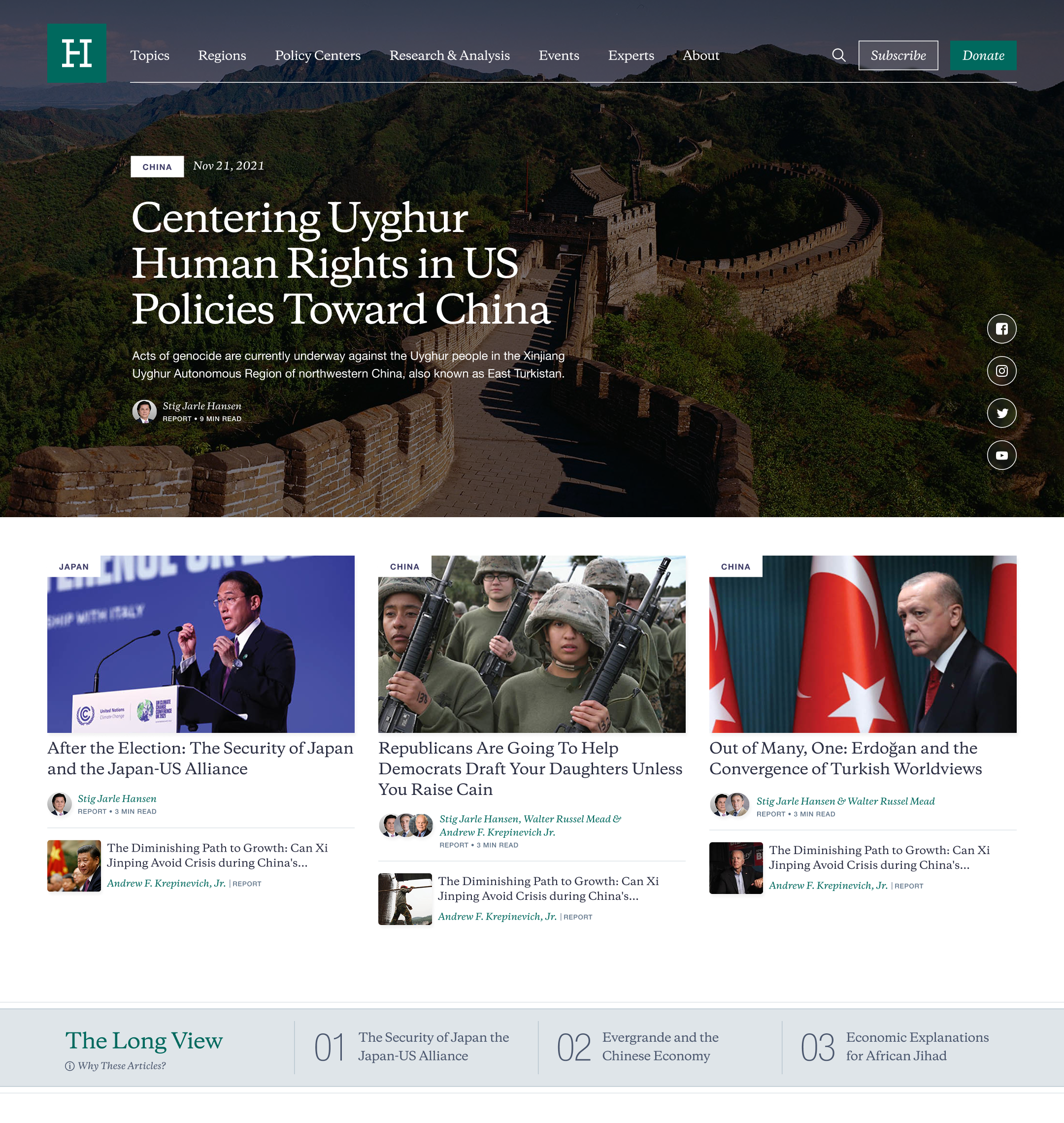
We reframed Hudson’s digital presence from the ground up. Navigation was rebuilt with clear pathways and strong hierarchy, while filtering and search tools finally made the breadth of content usable. Policy Centers were introduced to group research into topical hubs, giving niche audiences a direct entry point. Alongside UX, I introduced a light brand refresh and new component system to make pages visually distinct and easier to scan. On the backend, the CMS was streamlined so Hudson staff could publish content faster and more consistently.

MY ROLE
I led UX and creative direction across the entire redesign — mapping flows, designing components, and presenting to stakeholders. I managed a freelancer to help concept and another on wireframes (cleaning up and reworking as needed), while collaborating closely with a content strategist, technical architect, and project manager. I facilitated discovery sessions with Hudson, guided content restructuring, and ensured the redesign aligned both with user needs and Hudson’s mission.
OUTCOME
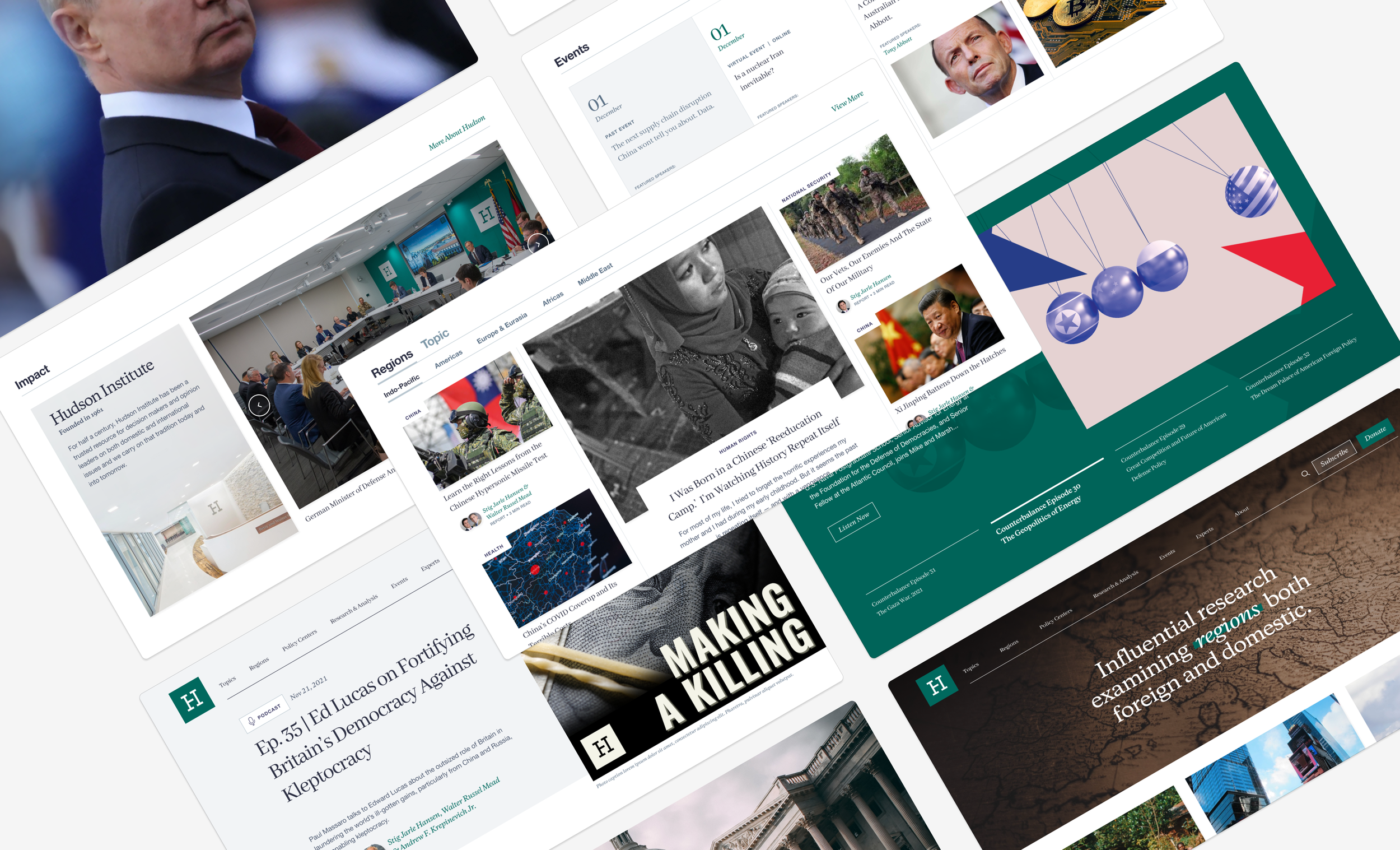
The redesign transformed Hudson’s site from an unusable dumping ground into a structured, research-first platform. Engagement and traffic saw a clear lift, and stakeholders gained a publishing system that was easier to update and maintain. The project earned industry recognition, including Web Excellence and Muse awards, and — more importantly — gave policymakers, journalists, and researchers a site that finally matched the caliber of Hudson’s work.